






Cable Bible: Info, Assembly & Maintenance
Cable Ends: Install, Remove & Fix
RPM Power is transitioning from its current three-grommet tightening cable ends to factory-fused cable ends on the exercise/handle side of some multi-gym cables. This removes the need for customers to tighten that handle-side end. The videos below demonstrate adjustable three-grommet fittings, including fixed-end fittings where supplied; they do not show how to undo or refit a factory-fused metal sleeve. Check which type is fitted to your cable before following a video.
Understanding the two cable-end styles
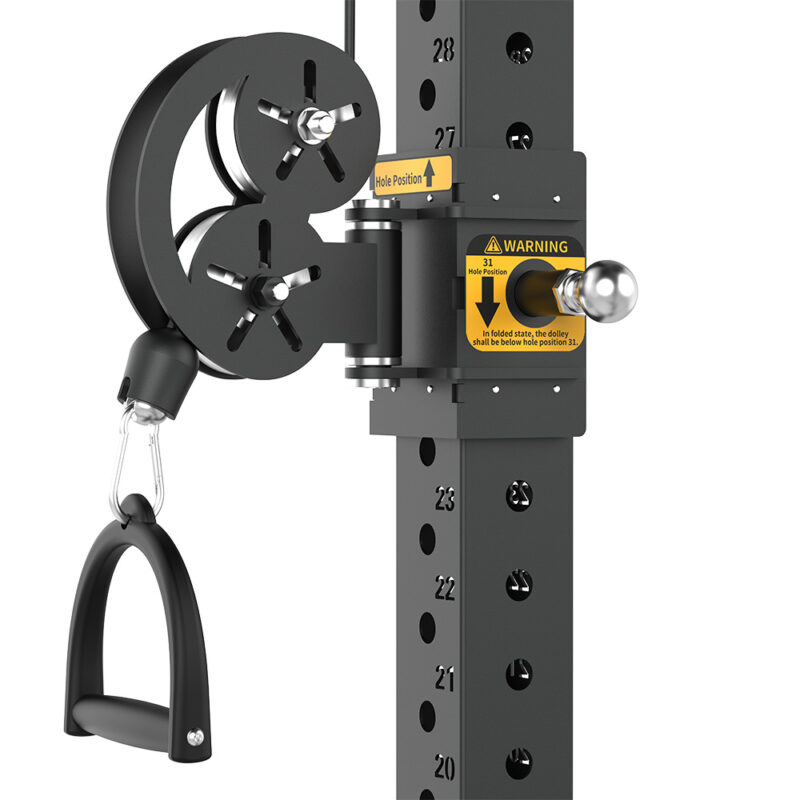
Look at the red arrows: the cable end is the small cylindrical fitting immediately beside the carabiner, not the large pulley wheel or its housing. The fitting at the exercise handle may look different from the one at the fixed point behind the cable trolley.


Current three-grommet fitting: The adjustable cable end shown in these videos is secured using its three tightening points. The opposite end of the cable still normally terminates at a fixed point using this three-grommet system, typically at the back of the cable trolley.
New fused fitting: Some cables will have a factory-fused metal sleeve at the exercise/handle end, so there is no customer tightening of that end. Do not try to loosen or remove a fused sleeve by following the three-grommet videos. The fixed end of the cable will typically remain a three-grommet fitting and still needs to be secured as directed by the manual.

Why the change? Most customers are fully able to tighten the three-grommet fitting correctly. In some cases, however, the fitting has not been tightened securely enough and the cable end has stripped. Fusing the exercise/handle-side end removes this customer-tightening step at that point; it does not remove the need to fit and check the other end or the pulley fixings.
Testing and load context: RPM Power has tested the cables themselves above 1,000 kg. The handle-side end fittings fail at a lower load, around 500 kg (over 1,000 lb); the adjustable and fused styles showed very similar results. Based on the multi-gym weight-stack capacities, this end-fitting failure load is approximately four times the maximum stack-based load. These are component-test comparisons, not a rated working load for the cable or machine, nor permission to exceed the equipment’s stated limits.
When do I need to remove pulley wheels?
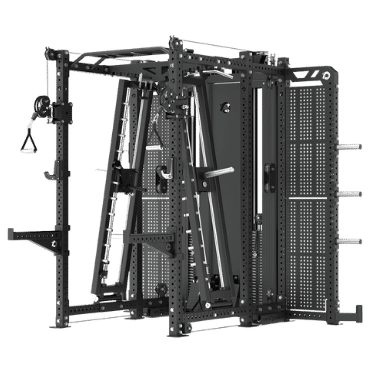
RPM Power multi-gyms arrive with their pulley wheels pre-assembled in the correct positions. This is intentional. Only when a cable has fused metal sleeves at both ends may you need to remove the relevant pulley wheels to feed the cable through its prescribed route. After routing the cable, refit the pulley wheels in their original positions and re-tighten their fixings securely in accordance with your rack manual. Confirm that every pulley turns freely and that the cable sits in each pulley groove before use. If only the handle-side end is fused and the other end is the usual removable three-grommet fitting, this two-fused-end pulley-removal step does not apply.

Before you use the machine
Let the weight stack rest fully before working on any cable. Check that each cable end and pulley fixing is secure, the cable follows the correct route and the weight stack travels smoothly. The videos explain adjustable cable-end fitting; they are not a repair method for a frayed or damaged cable. If a cable, sleeve or fitting is worn, damaged or still loose, stop using that station and contact RPM Power Support for advice or replacement parts.